
Baguette Ordinaire vs. Baguette de Tradition: What’s the Difference?
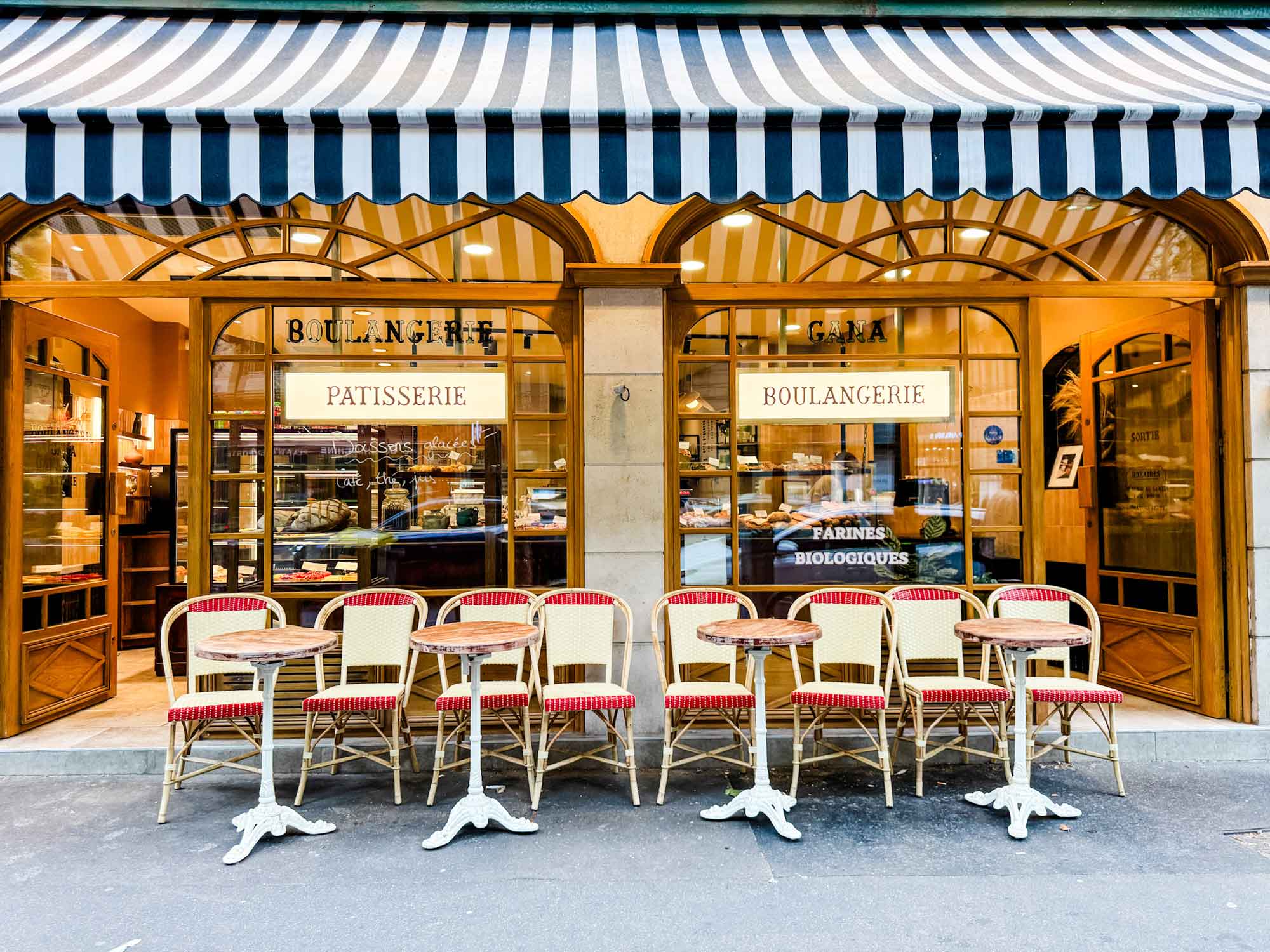
If you’ve ever walked into a Parisian boulangerie and asked for a baguette and then been asked whether you’d like a normale or a tradition, you know the slight panic that follows. You don’t want to ask, because you’re in Paris after all and should know, so you mutter whichever one comes to mind, not knowing what you really got, and hoping for the best.
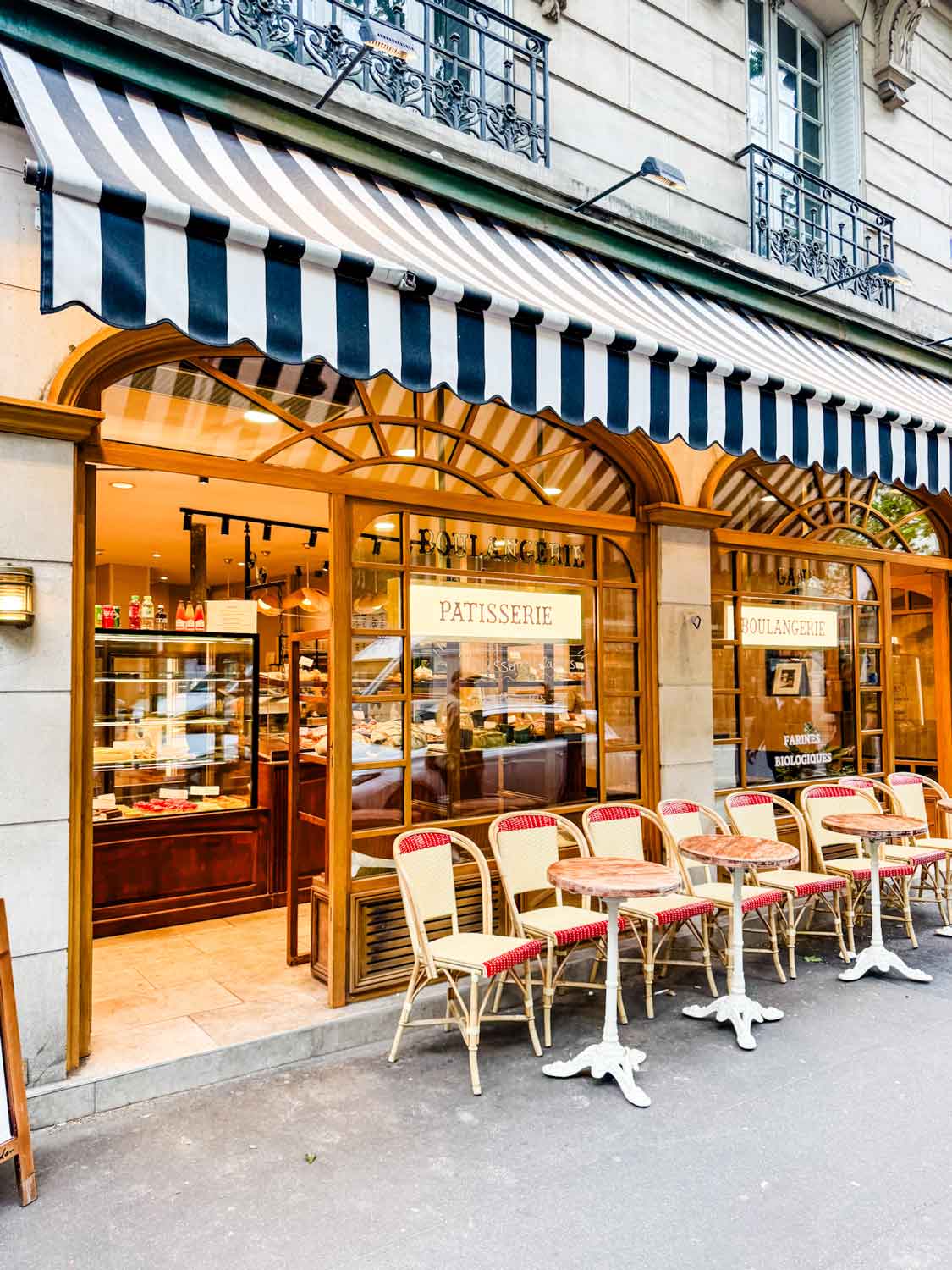
That’s exactly what happened to us on one of our earlier trips to Paris. Late one afternoon on the way back to our hotel, we stopped into a local boulangerie in the neighborhood to grab a baguette. The owner surprised us with a simple question: “Traditionnelle ou normale?”
At the time, we had no idea what she meant. So we smiled, said “normale,” paid for our bread, and took it back to the hotel genuinely unsure what we’d just bought, or what we’d missed.
When we got home, did a little research, and on our latest trip, armed with a bit more information, we decided to try one of each and do a blind test to see which one we liked better.
Here’s everything we learned and what happened.
What are the two types of baguette?
Most Americans (including myself on my first several trips) visiting France don’t realize that not all baguettes are the same. In fact, there are two very distinct types sold in almost every boulangerie. Understanding the difference and tasting them side-by-side, gave us a better appreciation for the simple baguette and the two different kinds.
The baguette ordinaire (or baguette classique)
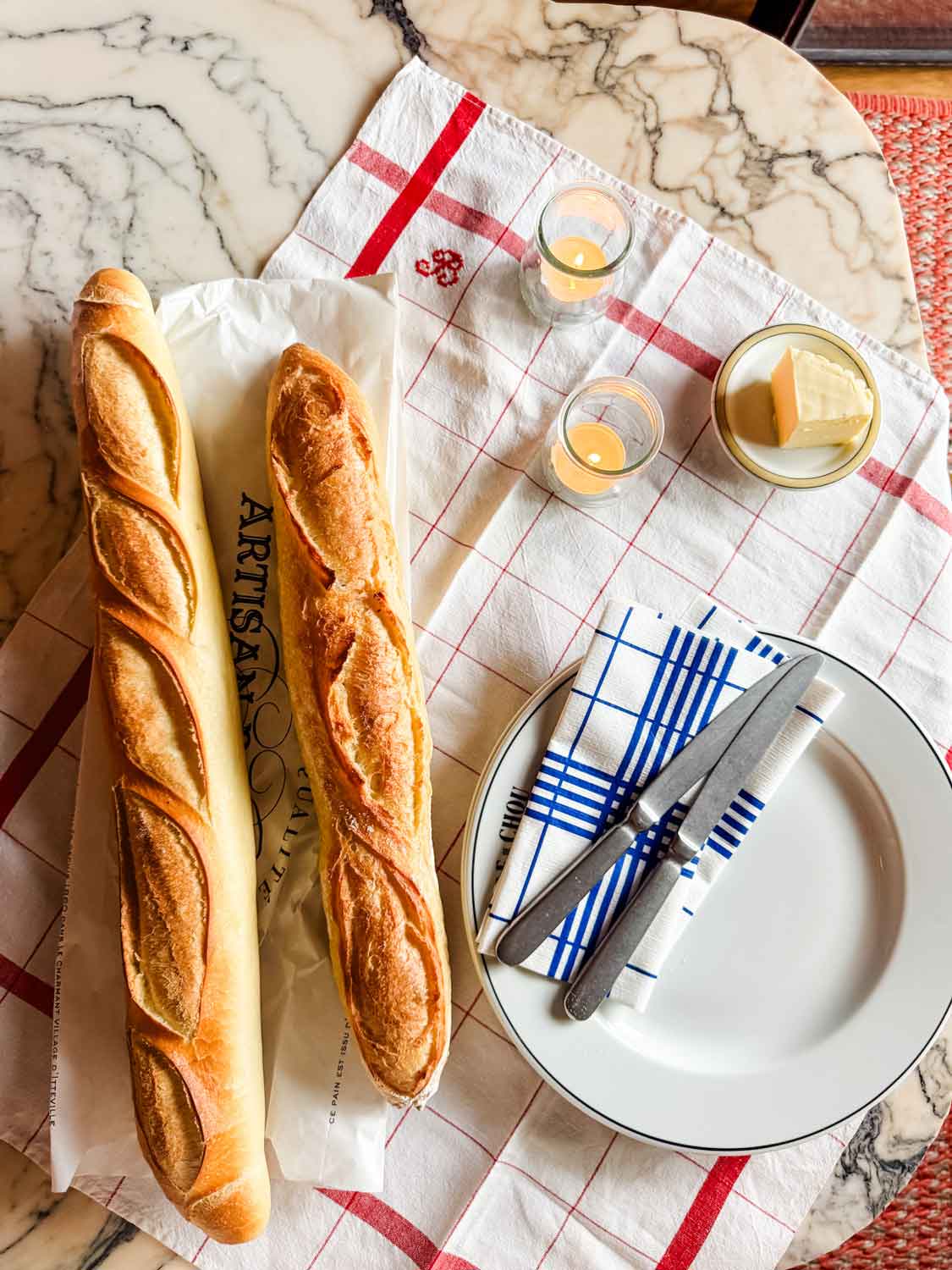
This is the kind of baguette that most of buy at home in our local supermarkets and what we think of when we say French baguette. The baguette ordinaire, also called the baguette classique, is the everyday bread of France. It’s made with commercial yeast, standard white wheat flour, salt, and water, and it rises quickly. The result is a soft loaf with a thin, pale golden crust and a uniform, fine crumb inside.
It’s always good. a little bit less expensive, available everywhere including supermarkets, and stays soft a bit longer than its counterpart, which is why many Parisians, particularly those buying bread for a family or for sandwiches, prefer it.
The baguette tradition (or baguette traditionnelle)
The baguette de tradition is a little bit different, and its production is actually protected by French law. In 1993, the French government issued what became known as the Décret Pain or the Bread Decree. It established strict rules about what can legally be called a baguette de tradition française. Under those rules, it must be made and baked on the premises where it’s sold, cannot be frozen at any point, and can contain only four ingredients: wheat flour, water, salt, and leavening (either natural sourdough starter or a small amount of commercial yeast with a long fermentation time).
There are no additives, no shortcuts, and no pre-made dough delivered by truck.
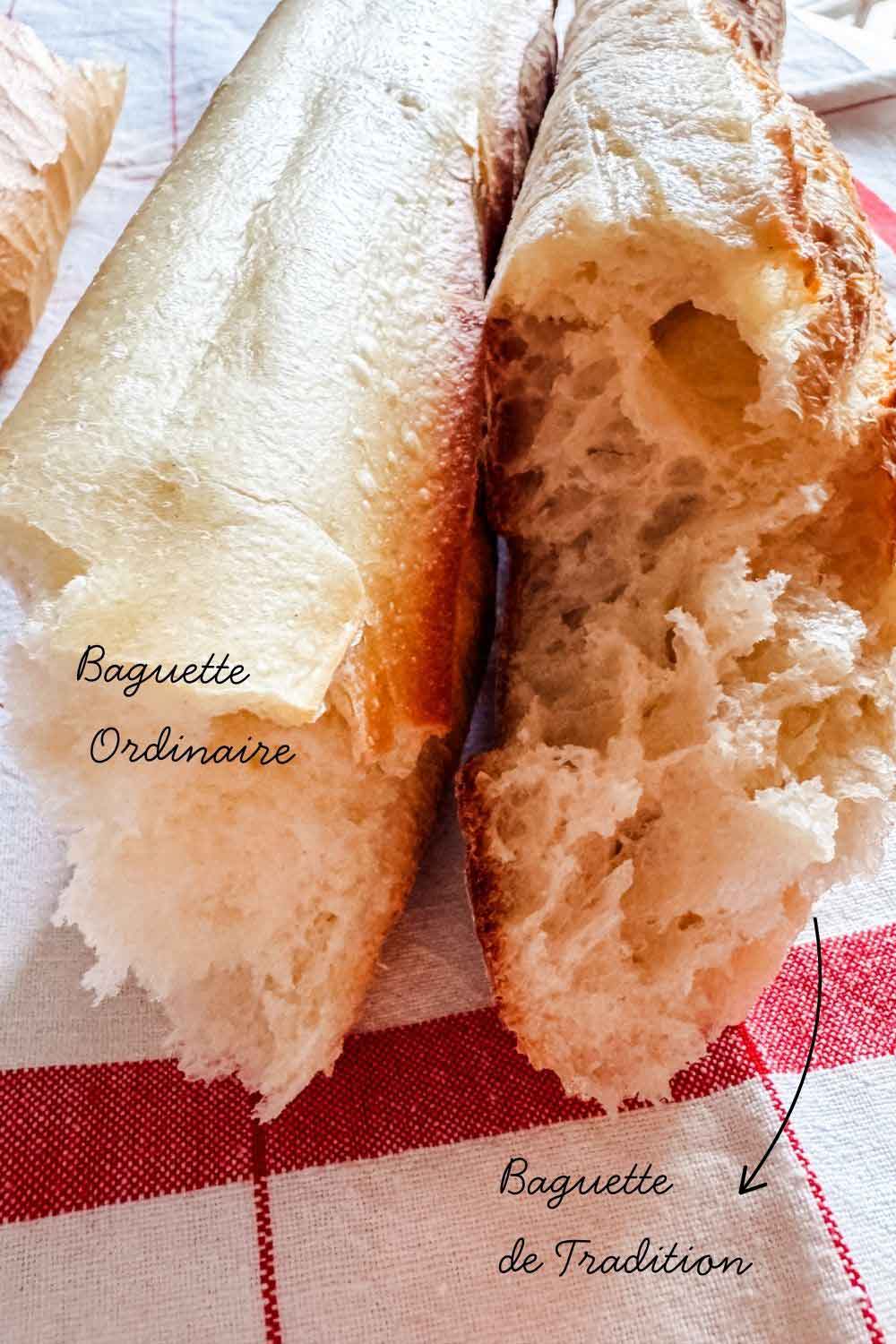
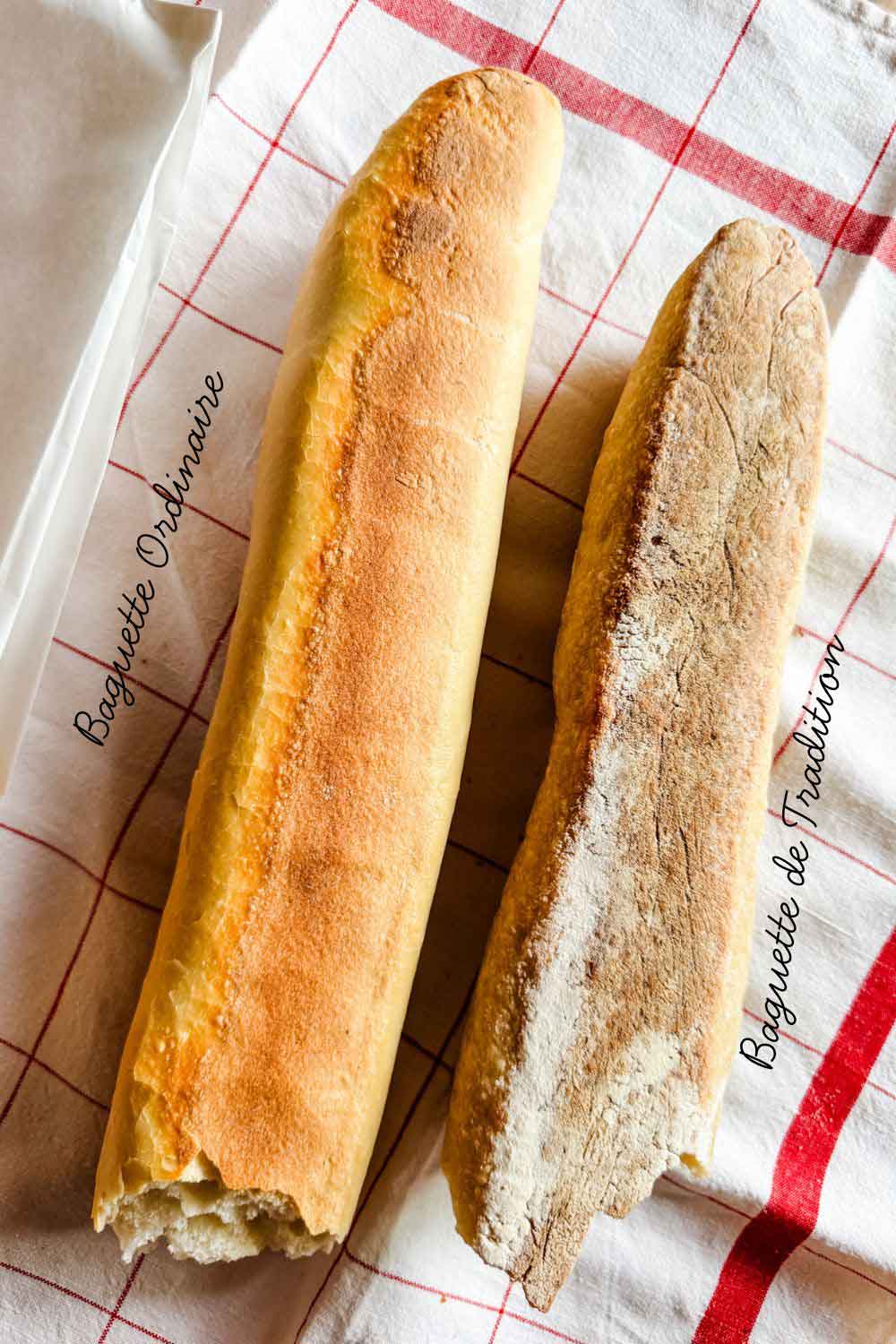
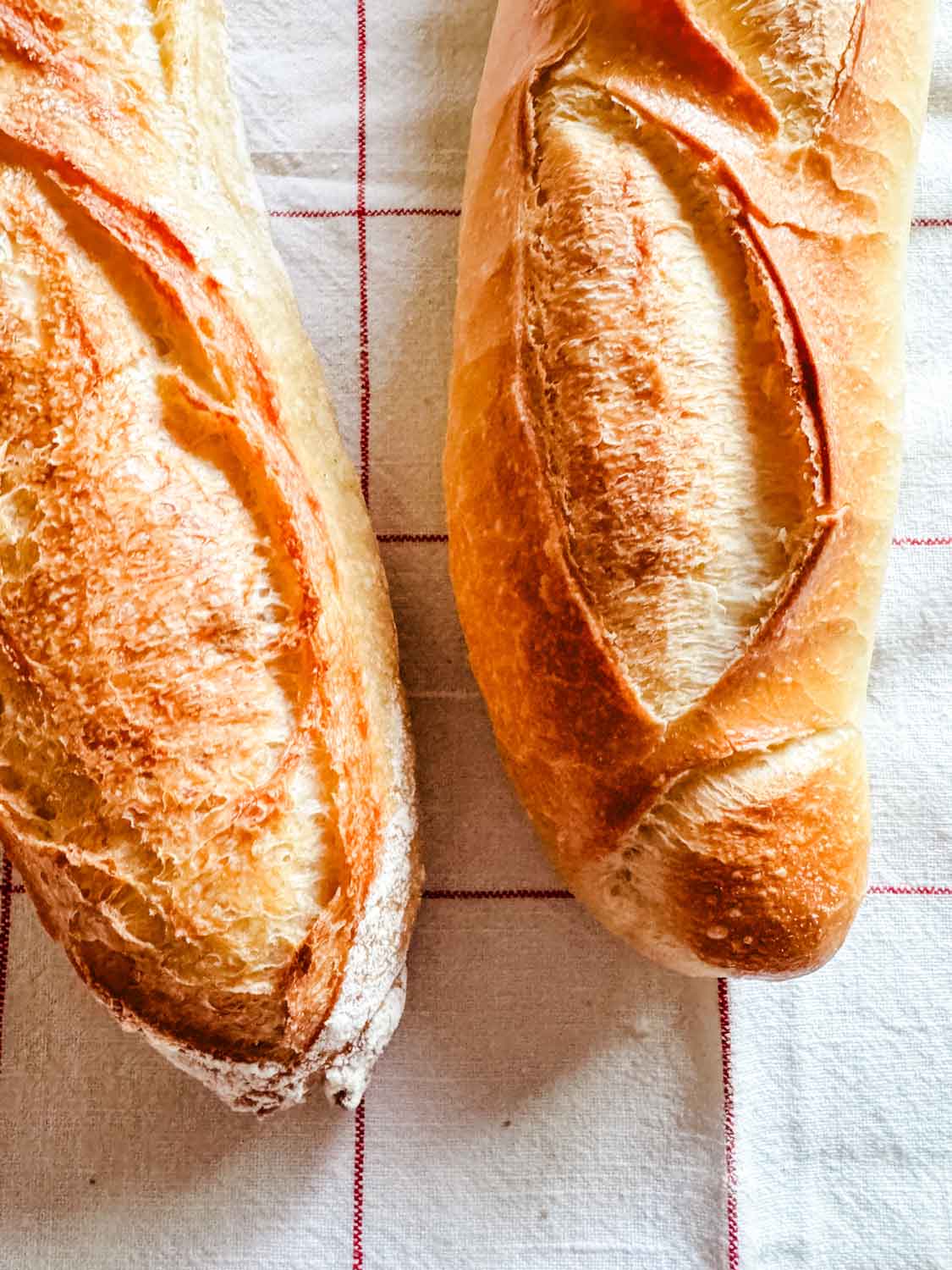
Sometimes you can spot the difference just by looking at them. The tradition tends to be more irregularly shaped, with a more rustic, flour-dusted appearance, while the ordinaire is smoother and more uniform. The bottoms tell a particularly clear story.
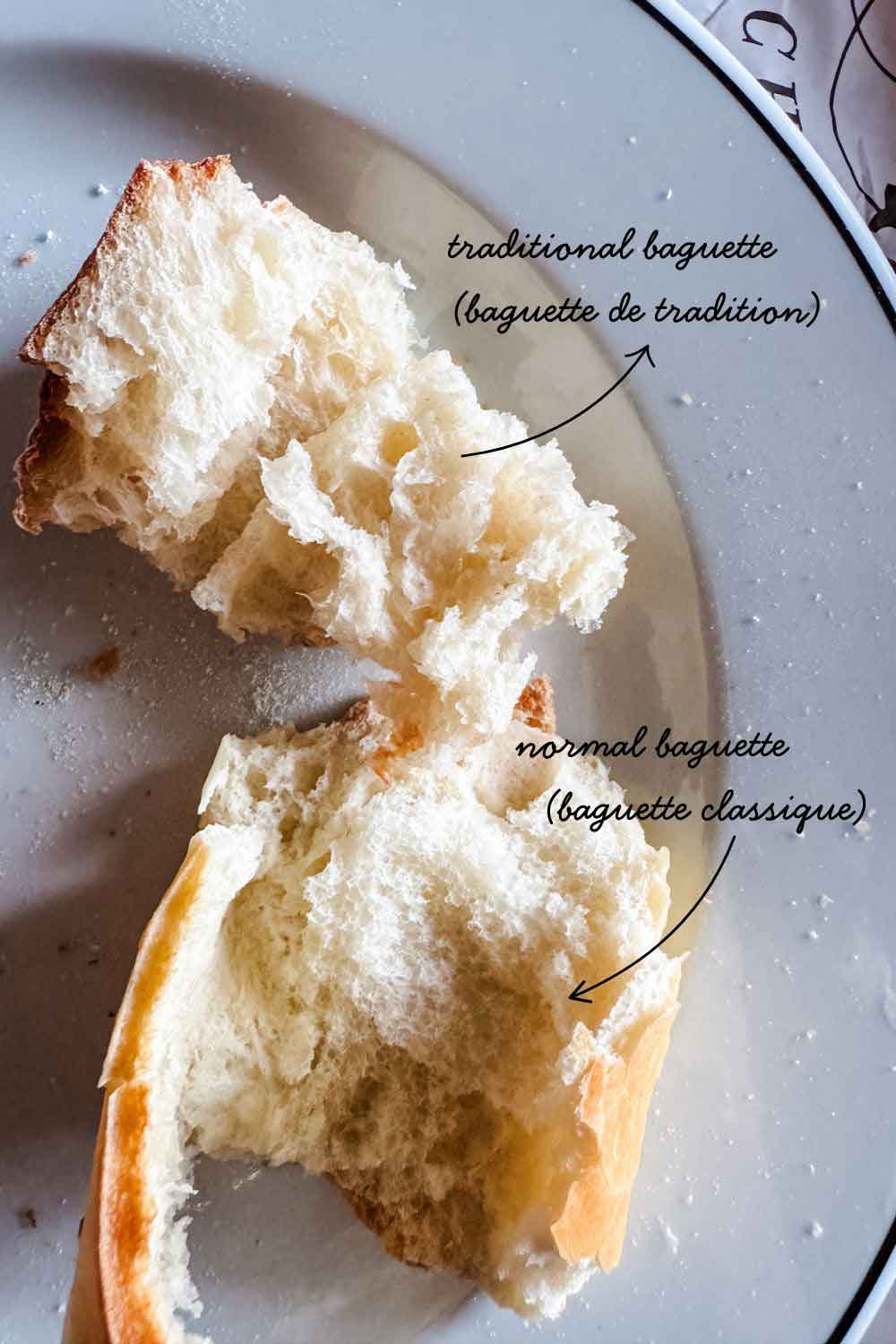
What’s the difference inside the baguette?
The baguette ordinaire has a tight, even, soft inside. It’s mild in flavor, pleasant, and very enjoyable to eat.
The baguette de tradition has a more open, rougher crust and inside with those large holes that bakers call “alveoles.” It’s chewier, with a little stronger wheat flavor. When it’s fresh (I mean a fresh from the oven and still warm baguette), it’s extraordinary with or without good butter.
Our blind test
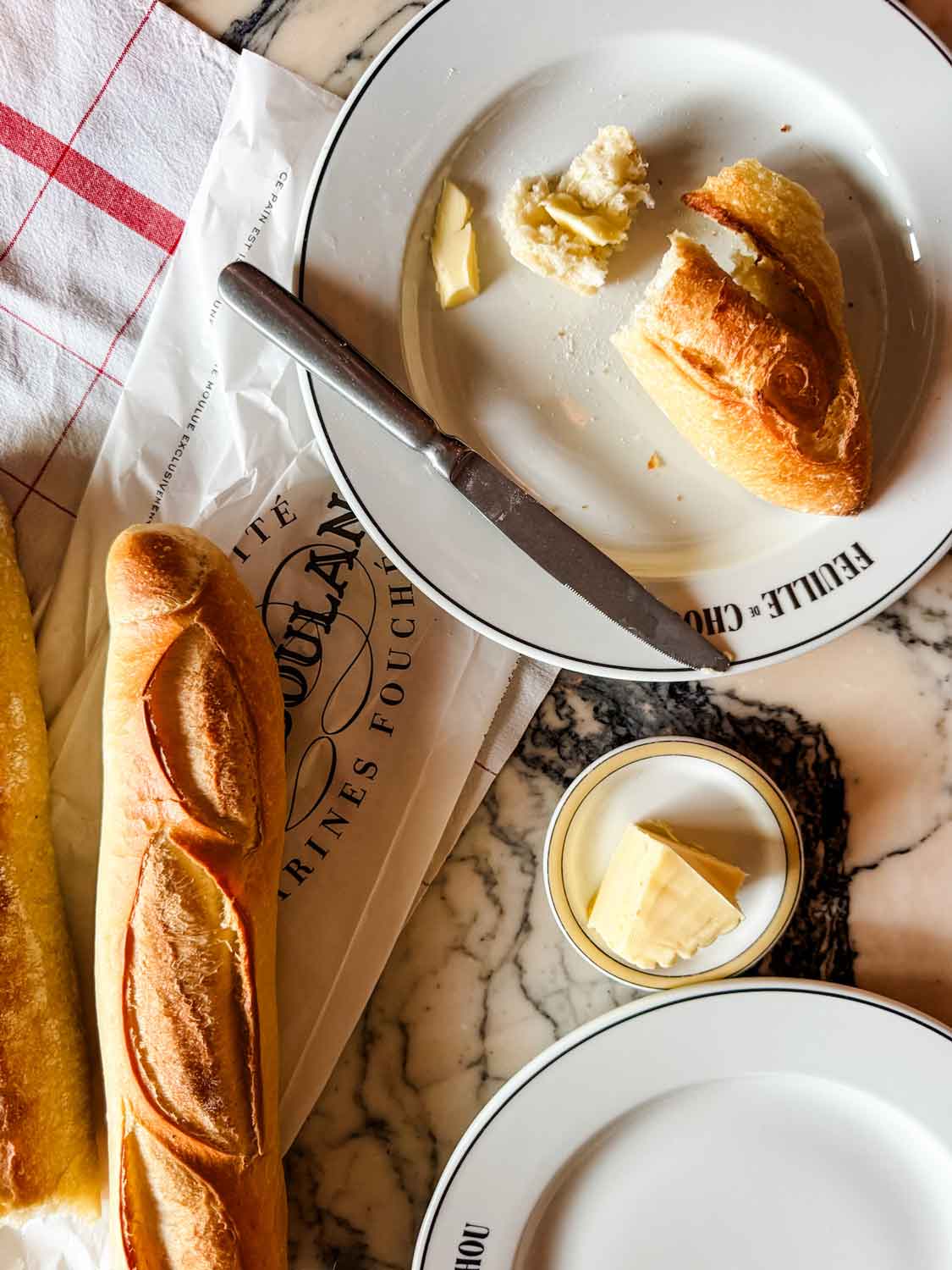
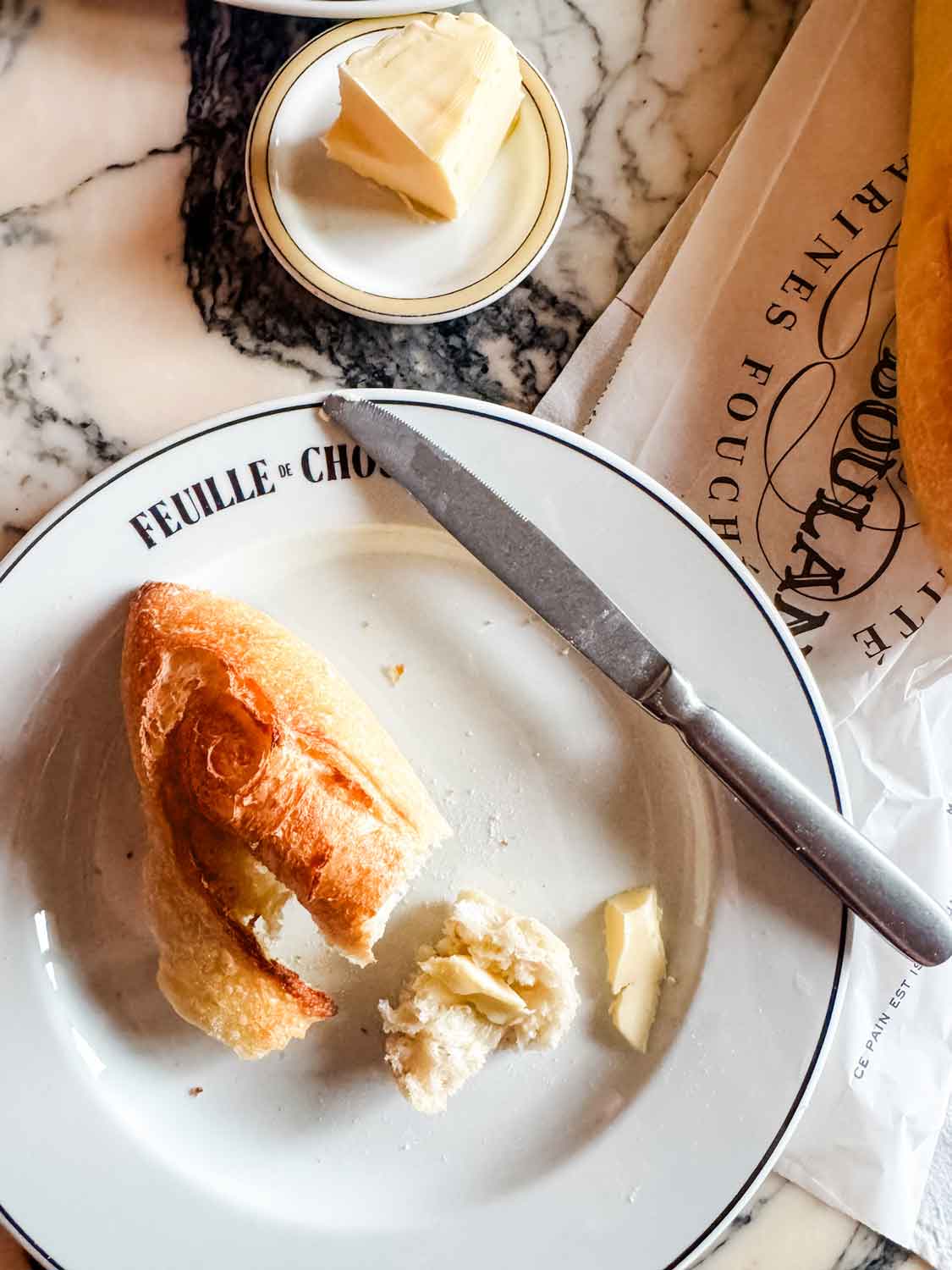
After learning everything we could about the two different types of baguettes, we wanted to see if we could taste the difference side-by-side. So on our most recent trip, we went back to the same boulangerie near our hotel and bought one of each. We set up a little tasting at our hotel that included fresh baguettes that were still warm, and good French butter.
We prepared a sampling tray for each other that included pieces with and without butter. The baguette de tradition was clearly our favorite. And surprisingly, you could really taste and see the difference. The crust was much crisper, and the crumb or inside had a depth of flavor that the ordinaire simply couldn’t match. The texture was also slightly chewier.
Later in the trip when stopping in at another boulangerie, we asked the woman who worked there which baguette she preferred. She told us she always buys the ordinaire, which completely surprised us. She prefers the softer texture for sandwiches, and she finds the traditionnelle gets stale faster. I guess that makes sense given the absence of additives and preservatives. She wasn’t wrong in her preference either. It really does come down to how you’re eating it and what you personally like. And trust me, both are delicious and the differences are subtle.
So which baguette should you buy?
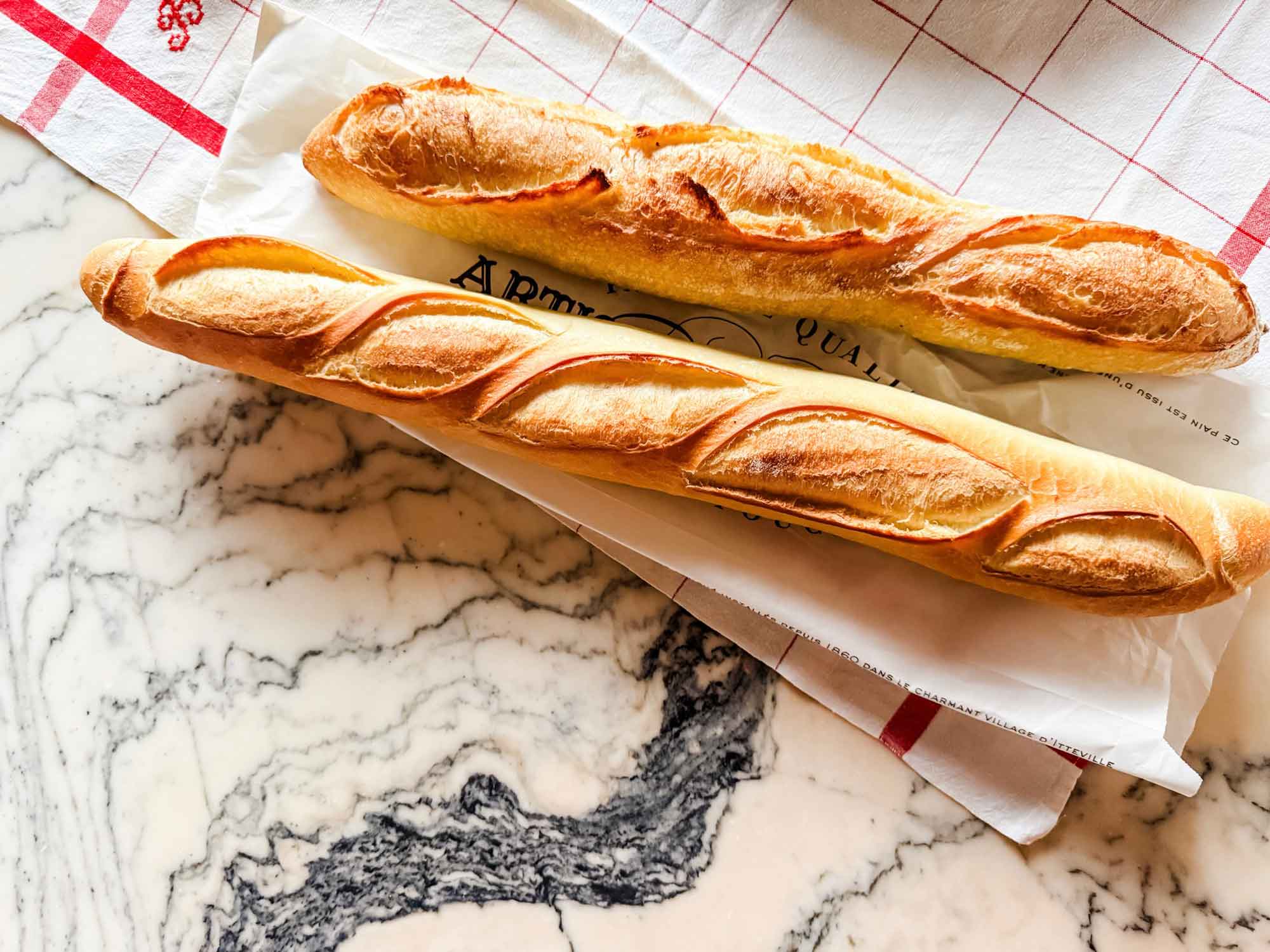
My honest take would be to buy one of each and decide which one you like best. If you buy it warm and are going to eat it right away, ask for the tradionnelle. The baker will likely be pleased that you know the difference. If you’re buying it in the morning, for later that evening, try the classique. Chances are, it will be softer when you eat it.
A few final tips for buying a baguette in France
Buy from a boulangerie, not a supermarket. The bread from a real bakery, made on premises, is so much better.
Buy your baguettes in the morning or late afternoon. Most boulangeries bake multiple times a day. The bread is at its best within two to three hours of coming out of the oven.
Ask for it well-done if you love a super crunchy crust. Most bakers will be happy to oblige.
Don’t slice it, tear it. Seriously. The experience of breaking into a fresh baguette with crumbs going everywhere, is part of the pleasure. Save the knife for when you add the butter.
And last, carry it unwrapped if you can. The paper sleeve the bakery gives you is fine, but a baguette tucked under your arm while you walk the streets of Paris is one of those small pleasures that never gets old.
The bottom line
The difference between a baguette ordinaire and a baguette de tradition is somewhat subtle but worth knowing if you’re planning a trip to France. I do think the tradition has slightly more flavor and a much crispier crust. The ordinaire is a delicious everyday loaf that has been on French tables for generations.
Try them both, side-by-side, and do your own blind test. And then go back the next day and grab the one you like best. I mean, who ever gets tired of a good baguette?




Loved this post – can almost taste the goodness!!
Where do you purchase your baguettes here in Fairfield County???
Have you tried Flour Water Salt Bread in Darien?
I will make it a point to go in next time I’m in Darien – Thanks so much!
Thanks for this very interesting post! I really enjoyed it.