Saint-Émilion Macaron Recipe: A Simple, French Almond Cookie
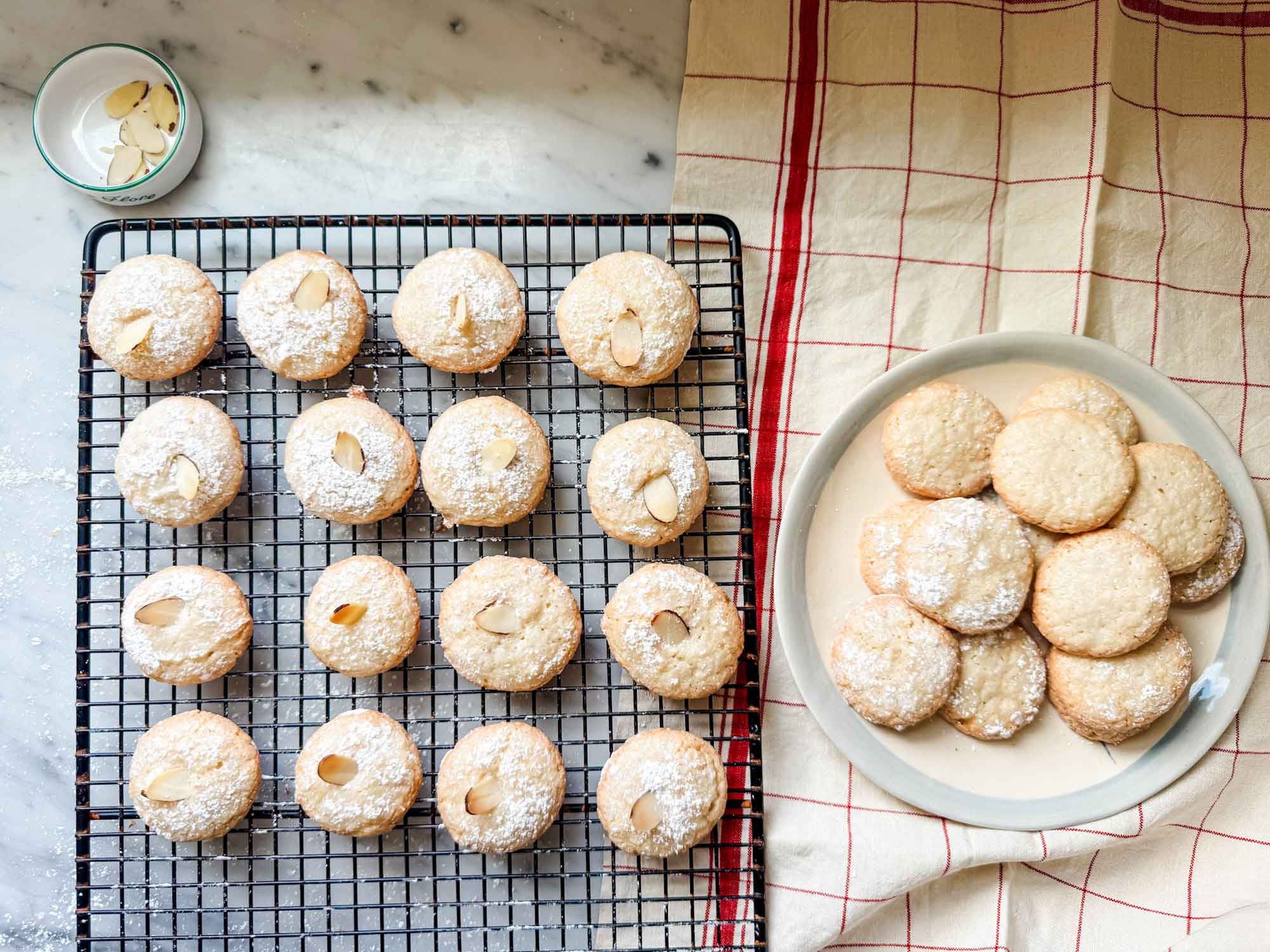
Long before every Parisian patisserie window had a display of pastel-colored sandwich cookies filled with ganache and buttercream, the macaron was something much simpler. The earliest version, known as the Saint-Émilion macaron, originated in a small village in southwestern France and consisted of just a handful of ingredients: almonds, sugar, and egg whites. Crisp on the outside and tender and chewy on the inside, this recipe is rustic, timeless, and simple
The story of the macaron dates back centuries, with roots often traced from the Middle East to Italy before making its way to France. One particular legend dates back to the French Revolution and explains that two nuns from Nancy, France, baked these cookies and sold them just to make ends meet. Their popularity quickly spread throughout all of France.
Over time, the recipe evolved, particularly in Paris, where it was eventually transformed, some say by a chef at Ladurée, into the elegant, sandwich cookie filled with cream we know today. While the modern macaron is known for its smooth tops and vibrant colors, the original macaron remains charmingly imperfect. It’s slightly crackled on top, deeply nutty, and a very simple and satisfying cookie.
This Saint-Émilion macron recipe returns to those simple origins, offering a more approachable way to enjoy a traditional French cookie at home.
What’s the difference between a Saint-Émilion macaron and the modern macaron?
The original Saint-Émilion macaron is simple and rustic, made with almonds, sugar, and egg whites. The modern macaron, on the other hand, is a delicate sandwich cookie with a ganache or buttercream filling between two smooth shells.
For those of us who aren’t trained pastry chefs, the modern version can be technically challenging to make and perfect. The original Saint-Émilion macaron, however, is much more forgiving, making it ideal for those of us who just enjoy baking at home.
What’s the difference between almond flour and almond meal for baking?
Almond flour is made from blanched almonds with the skins removed, which gives it a fine, light texture ideal for baking cakes, cookies, and pastries. Almond meal, on the other hand, is made from ground almonds with the skins left on. This results in a coarser texture with small brown flecks throughout.
If you only have almond meal on hand, you can still use it for this recipe. For a finer texture, sift it through a wire mesh sieve and discard the larger brown pieces that remain.
Ingredients for making Saint-Émilion macarons
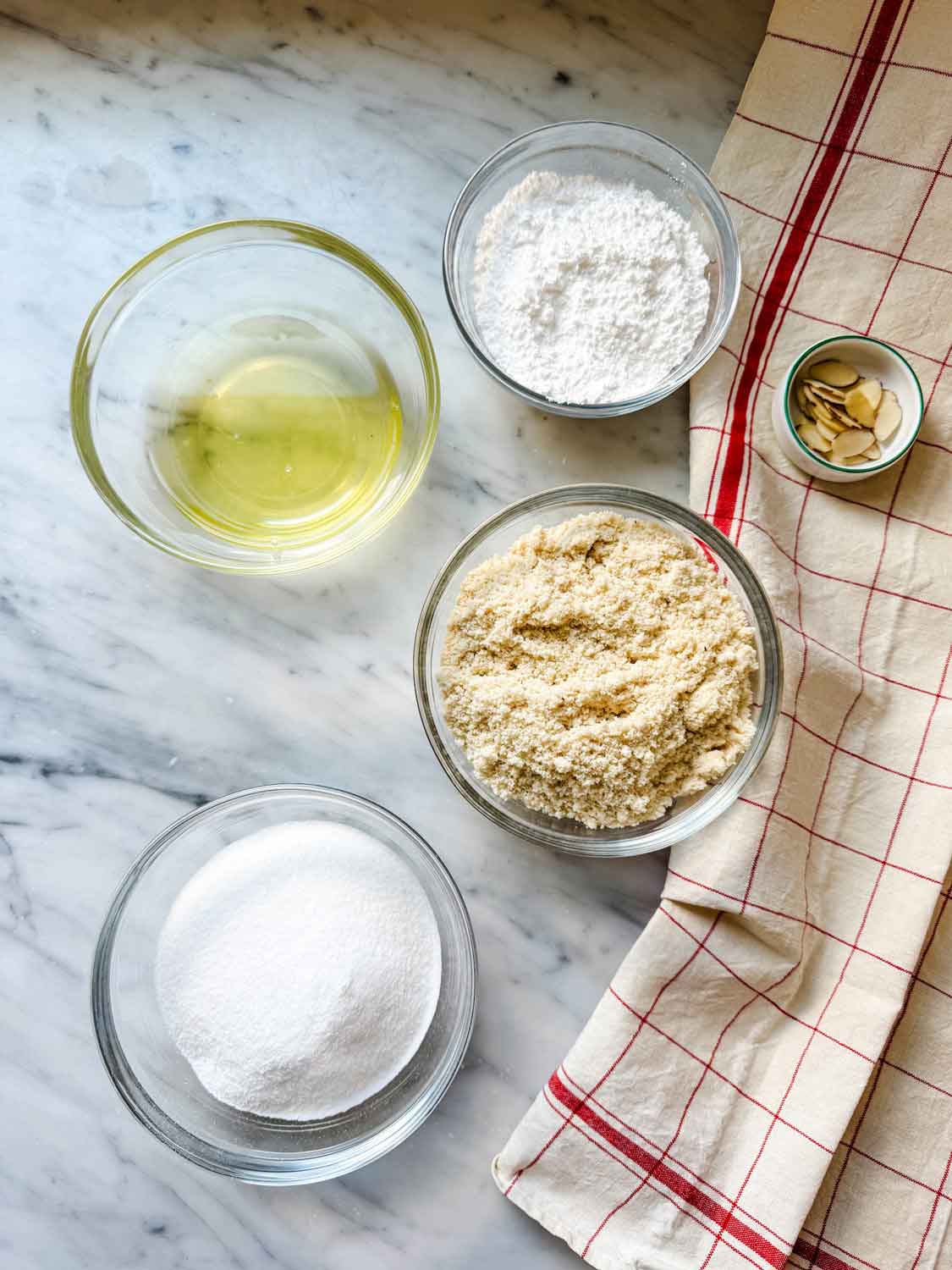
I usually convert grams to cups and tablespoons, but for baking certain recipes, I prefer using grams for accuracy. Since grams measure weight (rather than volume), they tend to produce more consistent results. I use a small kitchen scale for measuring.
- Granulated sugar (I pulse mine in the food processor for a few seconds to get superfine sugar)
- Almond flour
- Fresh egg whites (room temperature)
- Slivered almonds for a topping
- Powdered sugar for dusting
How to make Saint-Émilion macarons
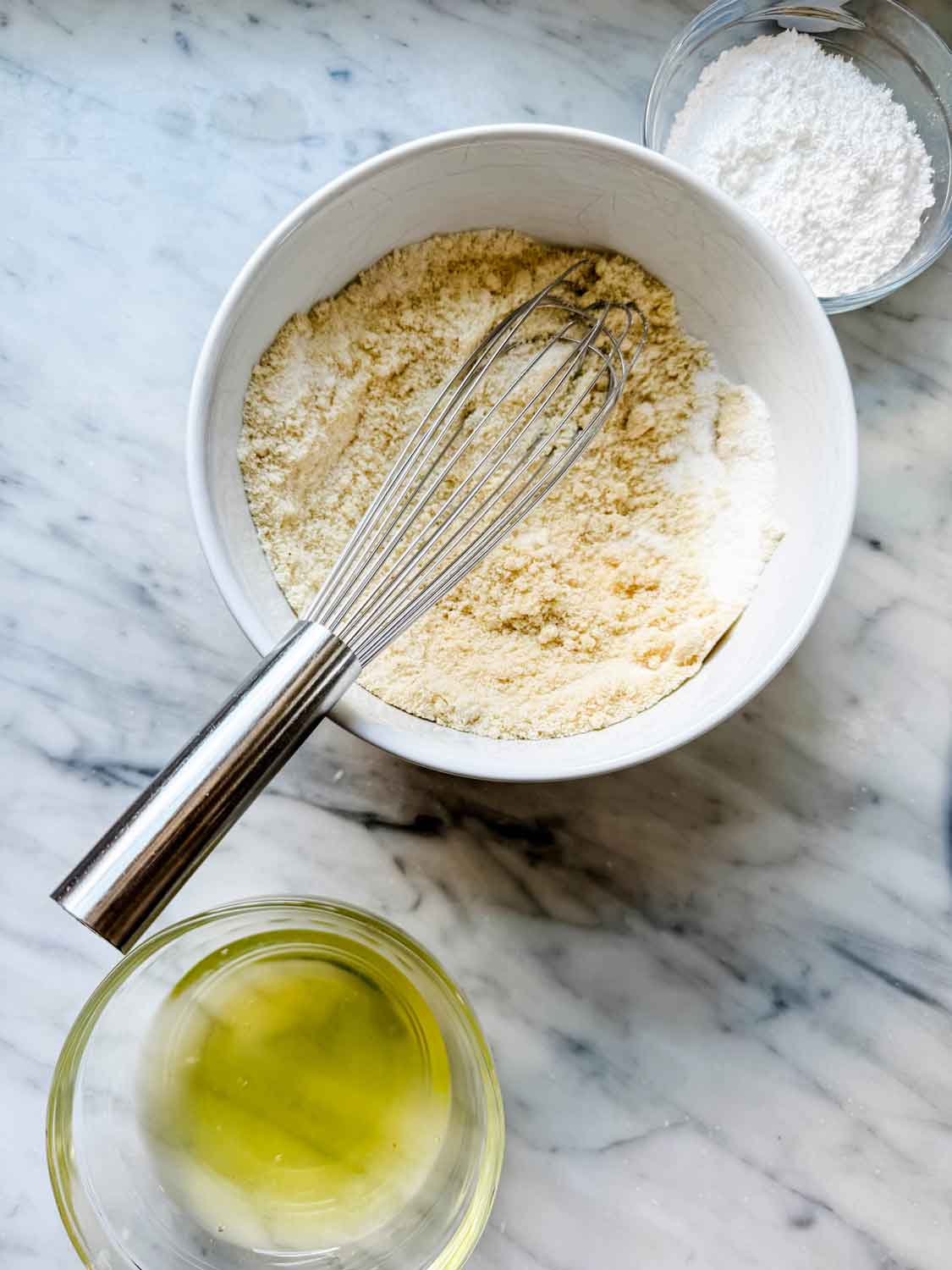
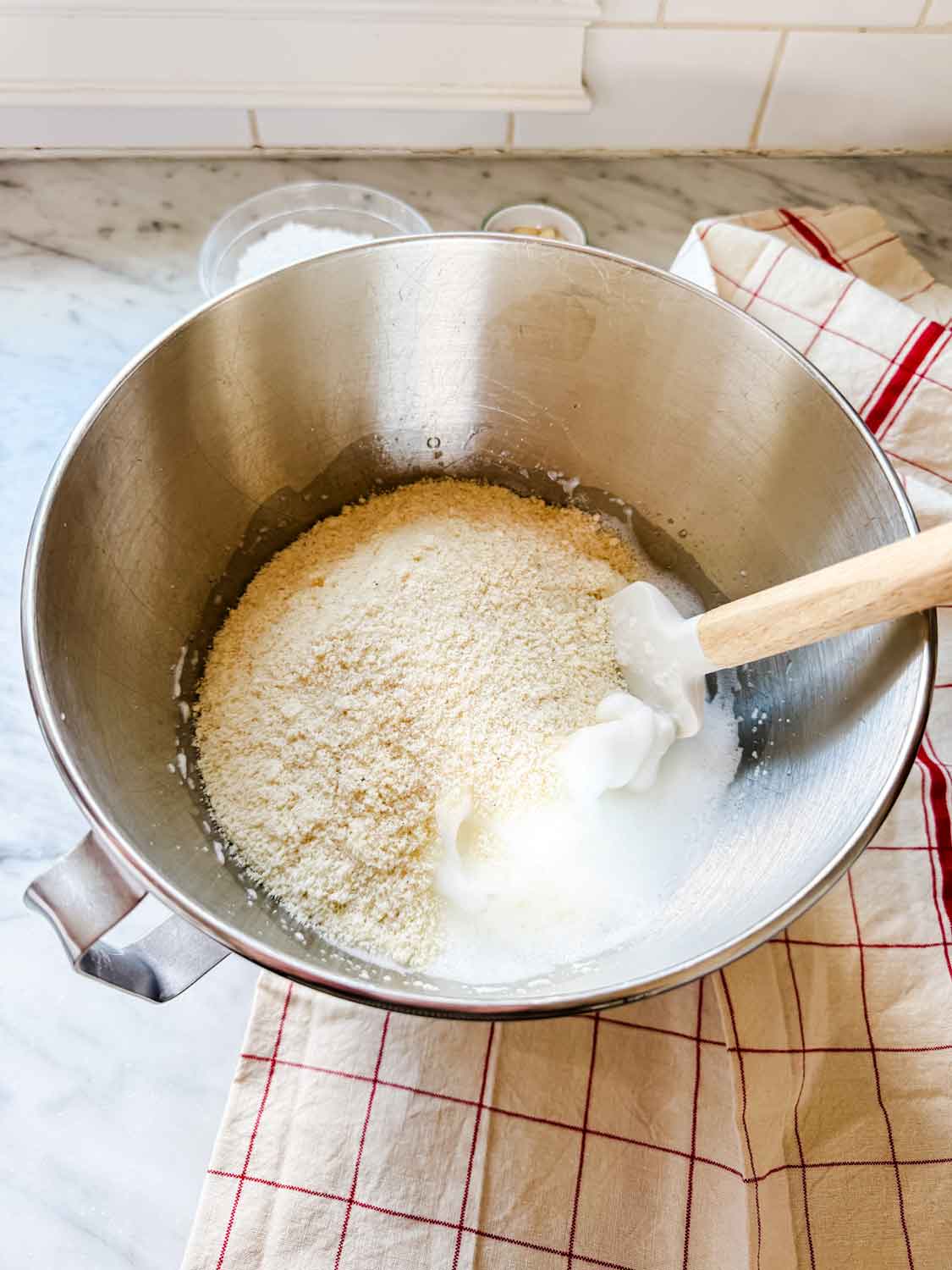
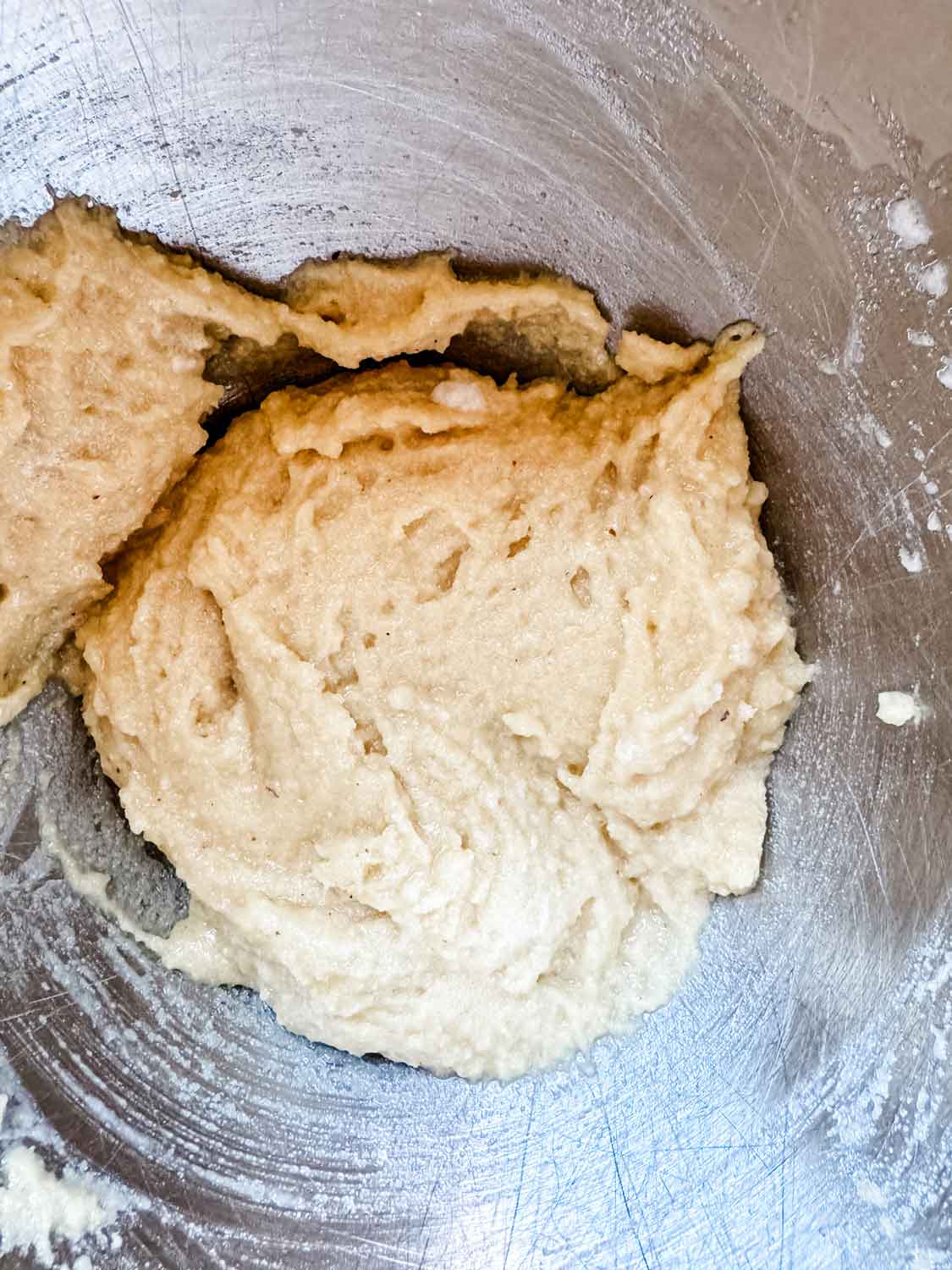
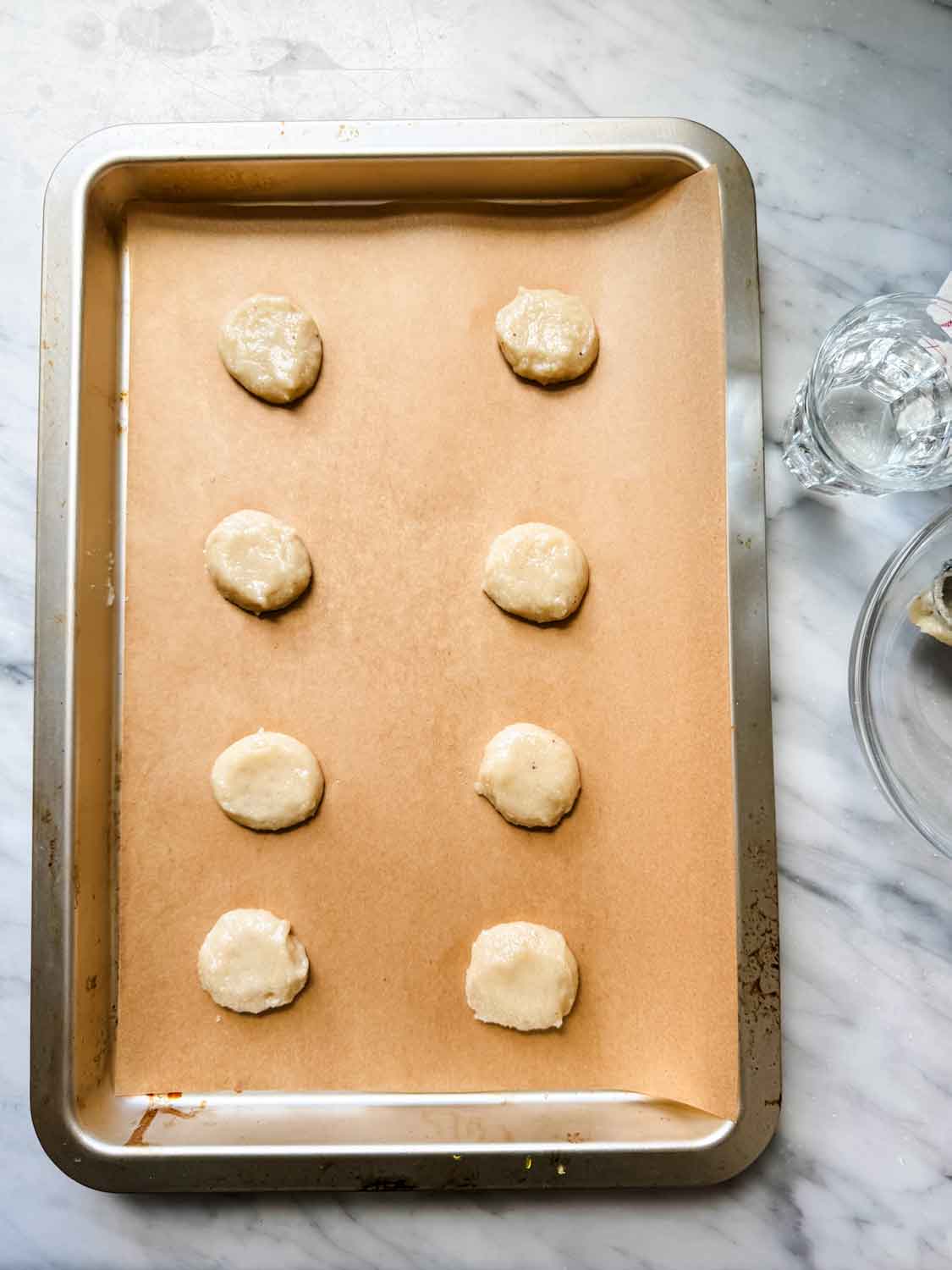
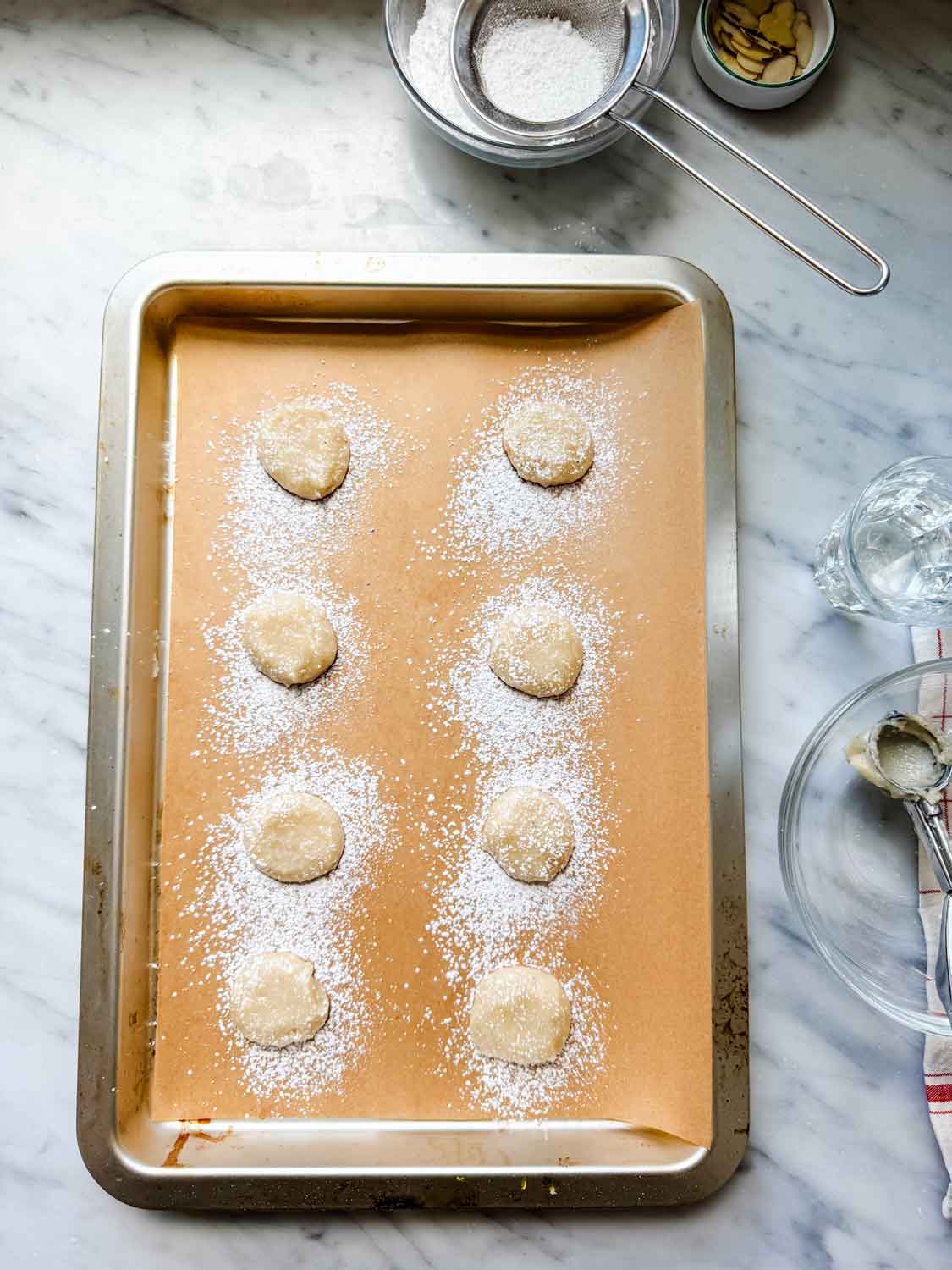
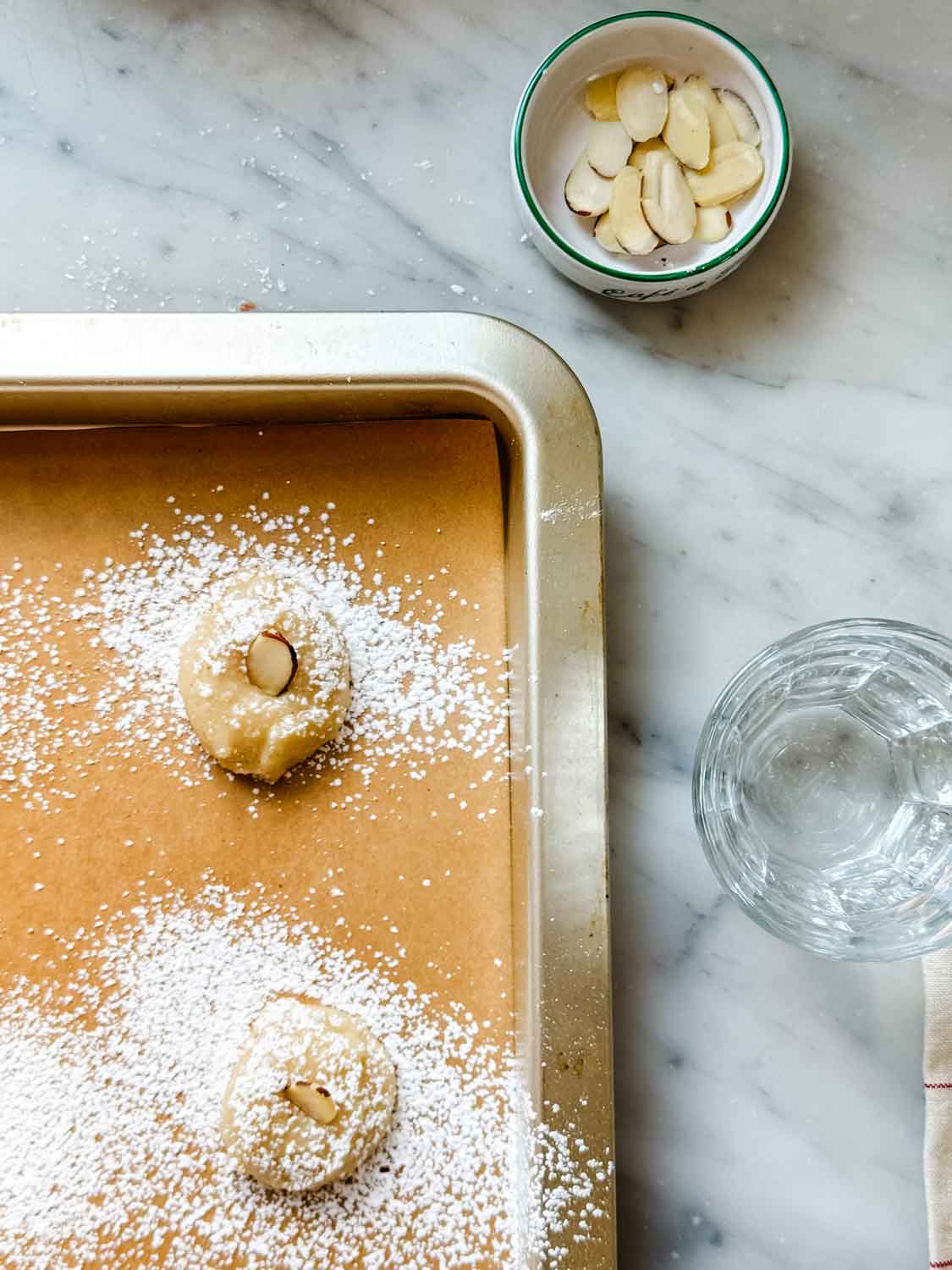
- Preheat the oven to 325 degrees and line two baking sheets with parchment paper or a silicone mat.
- In a small bowl, whisk together the sugar and almond flour until well combined.
- In the bowl of a stand mixer fitted with the whisk attachment (or use an electric hand mixer), beat the egg whites on high speed until soft peaks form.
- Remove the bowl from the mixer and add the dry ingredients. Using a rubber spatula, gently fold until fully combined and no almond flour clumps remain. Scrape down the sides and be careful not to overmix; you want to retain some air bubbles in the macaron batter. The batter should be at a scoopable consistency, not too runny.
- Using a small cookie scoop (some people like to use a piping bag or pastry bag), drop rounded portions onto the prepared baking sheets.
- Dip your fingertip in water and gently smooth the tops of each cookie in a circular motion, and round out the sides if necessary.
- Using a fine mesh sieve, dust generously with powdered sugar. If using, place a slivered almond in the center of each cookie.
- Bake for 20–25 minutes, until the edges are lightly golden and the tops remain soft.
- Remove the pan from the oven and transfer the baked macarons to a wire rack to cool. Be careful when transferring because the cookies will be very soft.
Tips for making perfect macarons
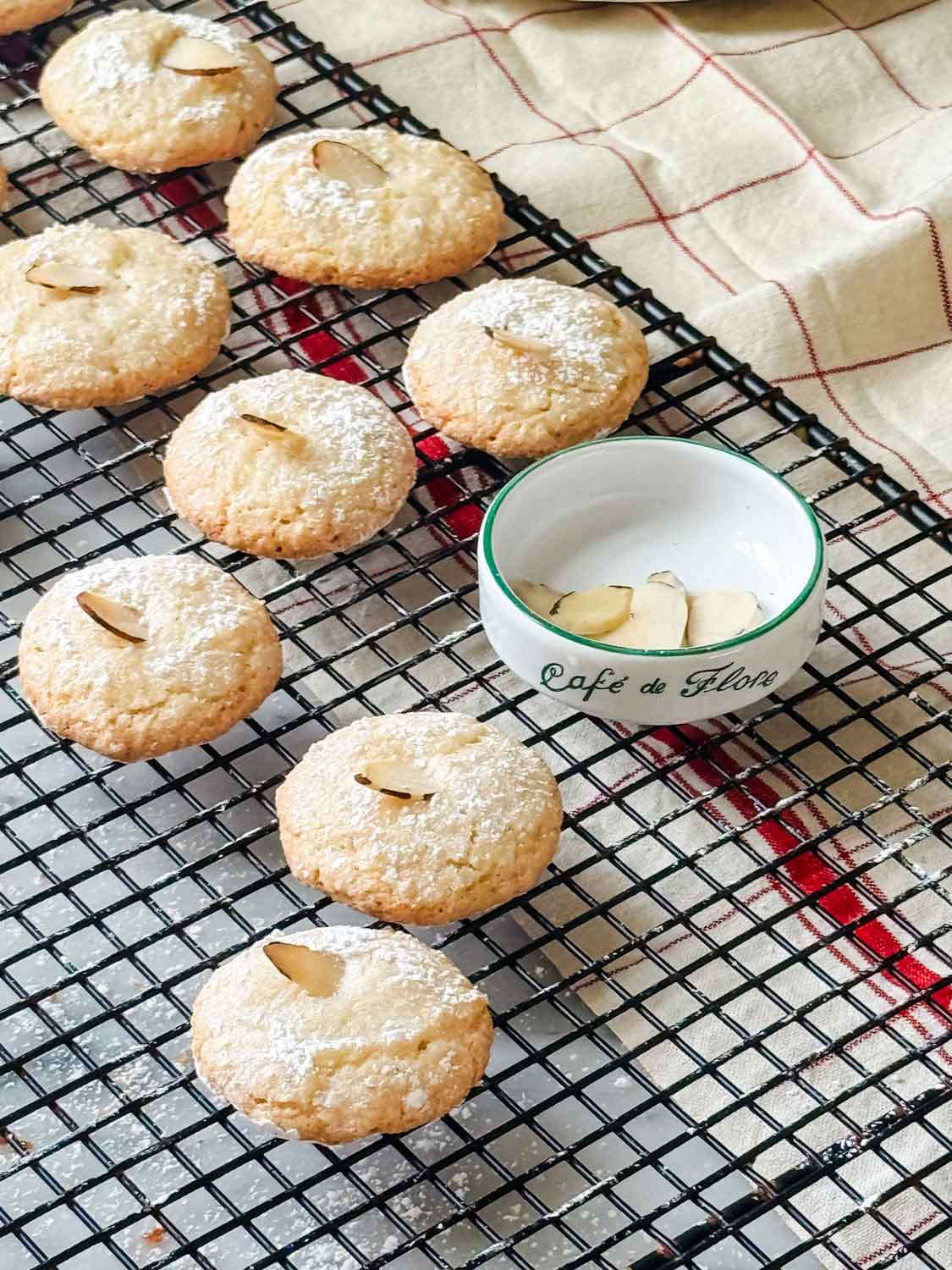
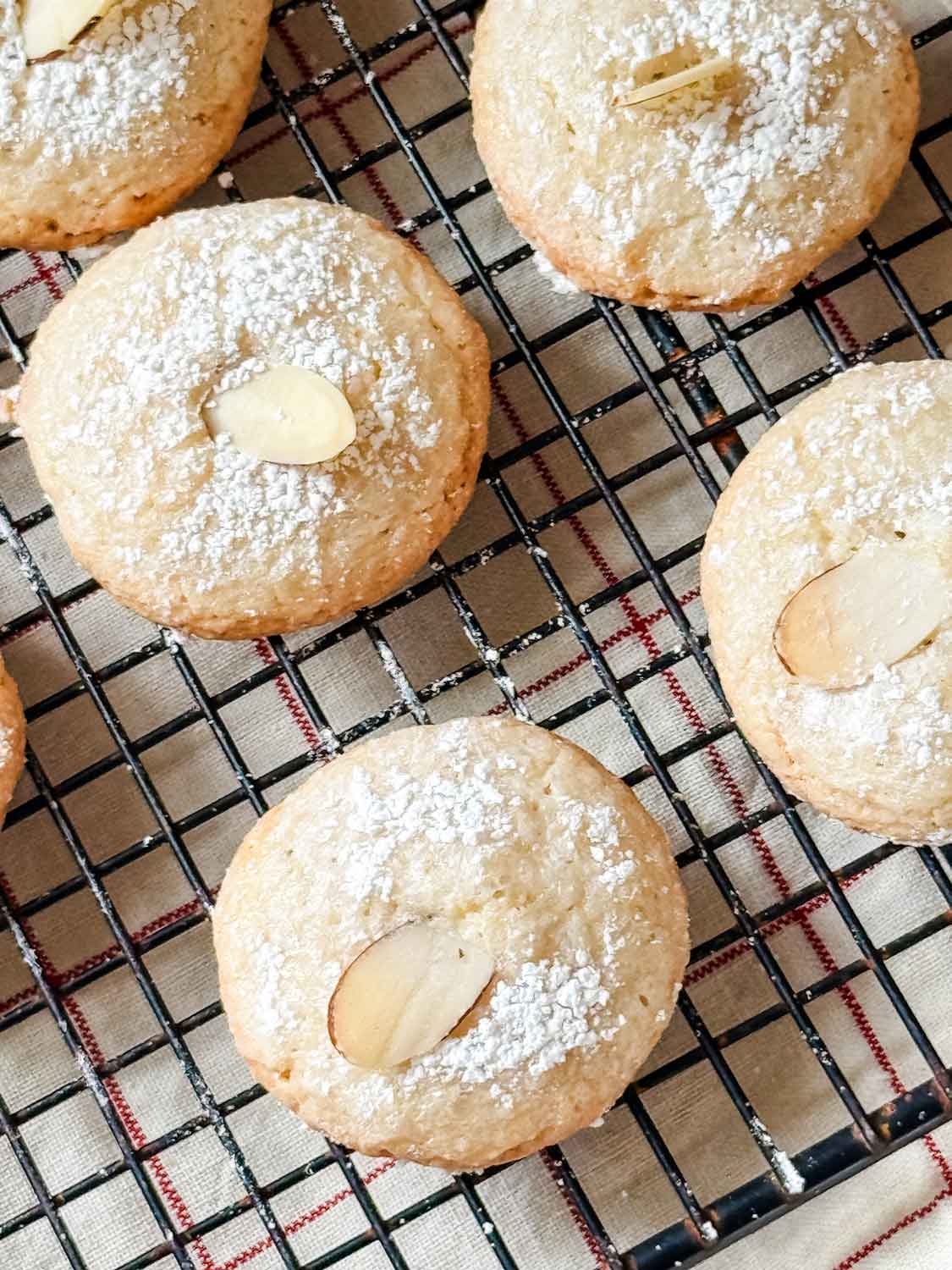
Even though Saint-Émilion macrons are much simpler than their modern counterparts, a few thoughtful techniques can make all the difference.
- Use finely ground almond flour for the best texture. If your almond flour feels slightly coarse, you can pulse it briefly in a food processor to create a more delicate crumb. This helps give the cookies their signature tender interior.
- If your almond flour has dark specs, you can sift it before adding it to the egg whites.
- Whip the egg whites just until they hold soft peaks. Overwhipping can make the batter too stiff, while underwhipping can cause the cookies to spread too much in the oven. You’re looking for a texture that feels light but still structured.
- When folding the ingredients together, be gentle. You want to preserve as much air as possible while still creating a completely combined batter. The finished mixture should feel thick but scoopable.
- I like to use super-fine sugar, so I pulse mine in the food processor before adding it to the recipe.
- With this recipe, don’t worry about perfection. One of the charms of the original French macarons recipe is its rustic appearance. Its tops are crackled, and the shapes are slightly uneven. I think that’s part of what makes them so beautiful and authentic.
- Just to make it look pretty, I add a slivered almond to the center of the cookie before sliding the baking sheet into the oven.
An easy macaron recipe for French cookies worth making
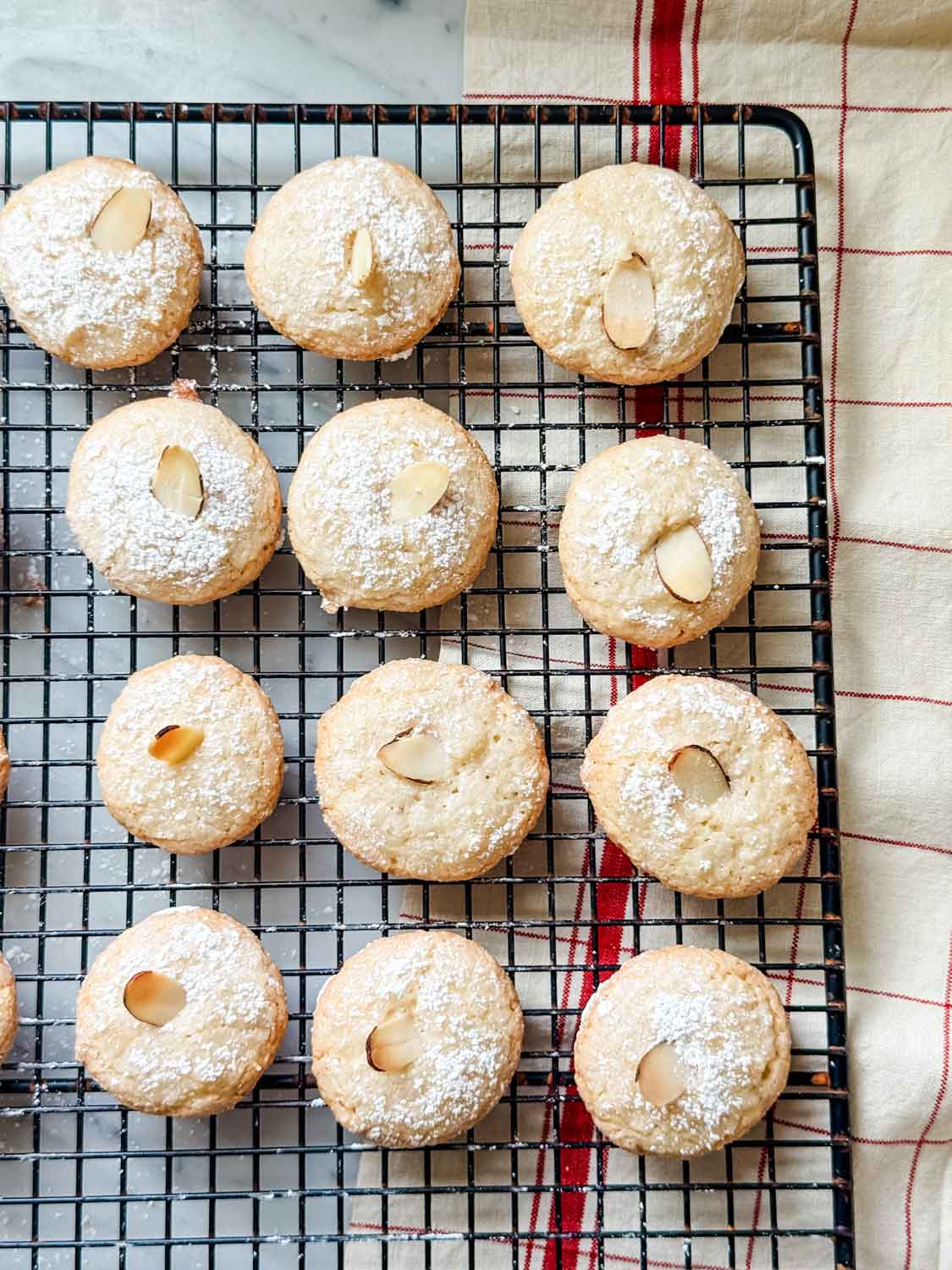
I like it when I find a recipe in its most original form. The Saint-Émilion macaron may not have the polished look of the modern version, but what I love about it is the simplicity of ingredients and the thought that I’m baking something that has been around for centuries. They are so easy to make and delicious to eat. And, great for sharing with friends and family.
Saint-Émilion Macaron Recipe: A Simple, French Almond Cookie

This Saint-Émilion macaron recipe is the original French macaron. Made with almond flour, sugar, and egg whites, it’s simple and delicious.
- Prep Time: 15
- Cook Time: 25
- Total Time: 40 minutes
- Yield: Approximately 30 cookies 1x
- Category: Dessert
- Method: Baking
- Cuisine: French
Ingredients
- 150g almond flour
- 175g granulated sugar
- 3 egg whites (room temperature)
- Powdered sugar for dusting
- Slivered almonds, if using
Instructions
- Preheat the oven to 325 degrees and line two baking sheets with parchment paper or a silicone mat.
- In a small bowl, whisk together the sugar and almond flour until well combined.
- In the bowl of a stand mixer fitted with the whisk attachment (or use an electric hand mixer), beat the egg whites on high speed until soft peaks form.
- Remove the bowl from the mixer and add the dry ingredients. Using a rubber spatula, gently fold until fully combined and no almond flour clumps remain. Scrape down the sides and be careful not to overmix; you want to retain some air bubbles in the macaron batter. The batter should be a scoopable consistency and not too runny.
- Using a small cookie scoop (some people like to use a piping bag or pastry bag), drop rounded portions onto the prepared baking sheets.
- Dip your fingertip in water and gently smooth the tops of each cookie in a circular motion, and round out the sides if necessary.
- Using a fine mesh sieve, dust generously with powdered sugar. If using, place a slivered almond in the center of each cookie.
- Bake for 20–25 minutes, until the edges are lightly golden and the tops remain soft.
- Remove the pan from the oven and transfer the baked macarons to a wire rack to cool. Be careful when transferring because the cookies will be very soft.